Data, Analytics & AI Enablement
Predictive Risk Analytics Reporting Redesign
Redesigned predictive risk reporting for a national healthcare payer to transform opaque model outputs into clear, actionable insights. The initiative standardized definitions, aligned data science and engineering pipelines, and introduced explainable risk drivers to improve trust, accuracy, and care prioritization.
Year :
2025
Industry :
Healthcare / Predictive Analytics
Client :
National Healthcare Payer
Project Duration :
6 Months
Problem :
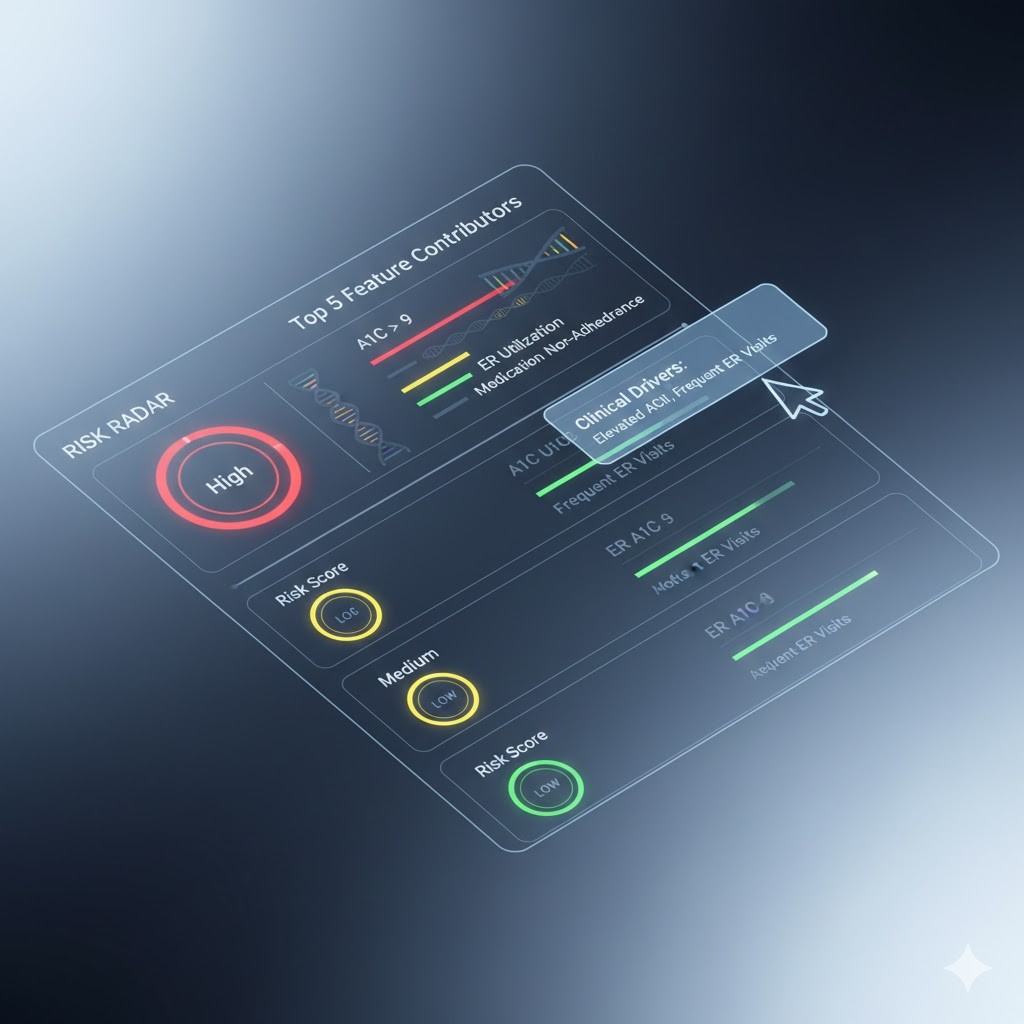
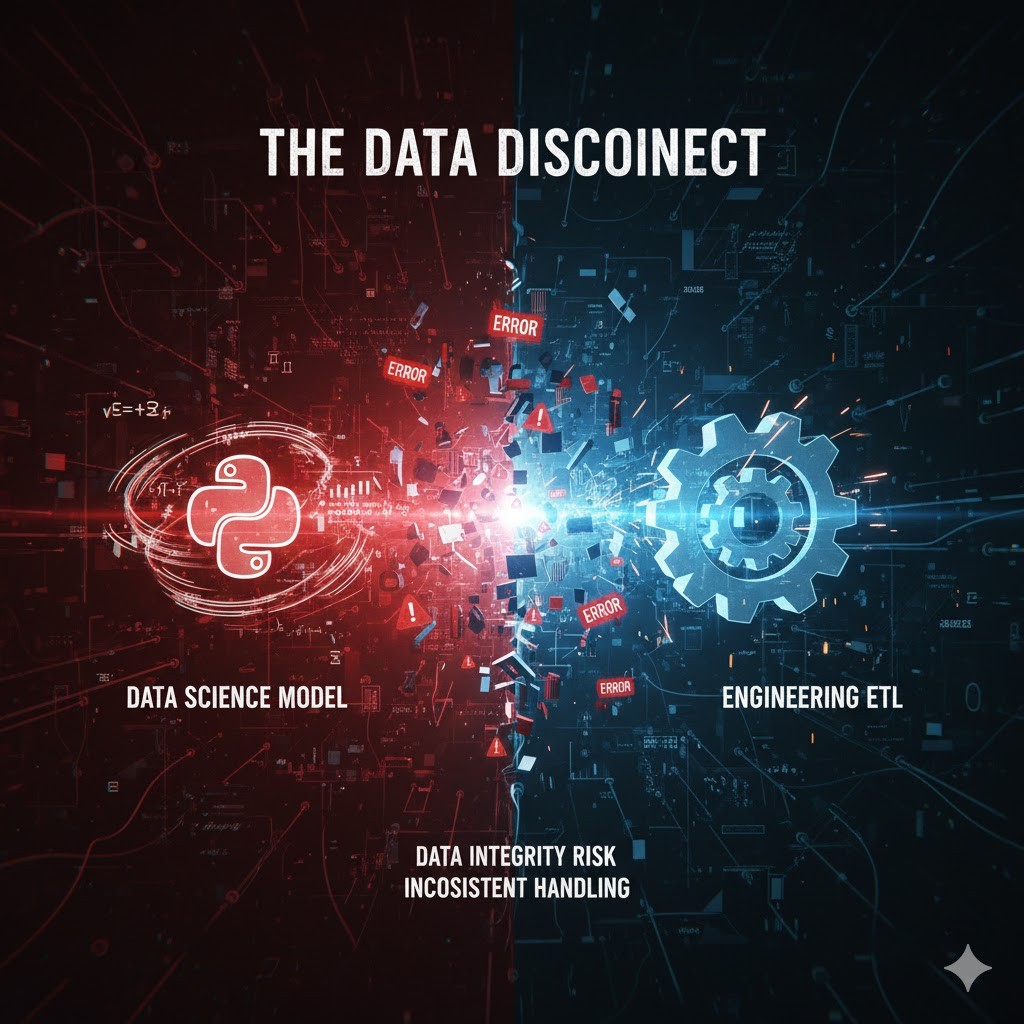
Care management teams relied on predictive risk reports that surfaced a single risk score without context, explanation, or validation. Data Science model outputs often conflicted with Engineering ETL results, creating data integrity risk and eroding stakeholder confidence. Without transparent risk drivers, teams could not confidently prioritize interventions, putting population health outcomes and cost control at risk.
Solution :
I led a full redesign of the predictive risk reporting product, shifting from opaque scores to an explainable risk model. The solution introduced segmented risk tiers (High / Medium / Low), probability-based thresholds, and a “Top 5 Risk Contributors” view explaining why each member was flagged. I aligned Data Science, Engineering, QA, and Product through standardized PRDs, strict data mapping tables, and a weekly triad sync to ensure model outputs and reporting pipelines remained perfectly synchronized.


Challenge :
Frequent model changes from Data Science repeatedly broke downstream reporting and QA workflows. To stabilize delivery without slowing innovation, I implemented a schema freeze window and a formal change control process that requires documented impact analysis for late changes. This governance approach preserved model accuracy while restoring predictability to reporting releases.
Summary :
The redesign resulted in a 25% reduction in interpretation-related rework, a 30% increase in stakeholder confidence, and 100% field-level accuracy across more than 50 data columns. Care teams gained transparent, explainable risk intelligence, enabling them to prioritize more effective interventions. The project established a scalable governance model that strikes a balance between data science innovation and operational reliability.

More Projects




Data, Analytics & AI Enablement
Predictive Risk Analytics Reporting Redesign
Redesigned predictive risk reporting for a national healthcare payer to transform opaque model outputs into clear, actionable insights. The initiative standardized definitions, aligned data science and engineering pipelines, and introduced explainable risk drivers to improve trust, accuracy, and care prioritization.
Year :
2025
Industry :
Healthcare / Predictive Analytics
Client :
National Healthcare Payer
Project Duration :
6 Months
Problem :
Care management teams relied on predictive risk reports that surfaced a single risk score without context, explanation, or validation. Data Science model outputs often conflicted with Engineering ETL results, creating data integrity risk and eroding stakeholder confidence. Without transparent risk drivers, teams could not confidently prioritize interventions, putting population health outcomes and cost control at risk.
Solution :
I led a full redesign of the predictive risk reporting product, shifting from opaque scores to an explainable risk model. The solution introduced segmented risk tiers (High / Medium / Low), probability-based thresholds, and a “Top 5 Risk Contributors” view explaining why each member was flagged. I aligned Data Science, Engineering, QA, and Product through standardized PRDs, strict data mapping tables, and a weekly triad sync to ensure model outputs and reporting pipelines remained perfectly synchronized.
Challenge :
Frequent model changes from Data Science repeatedly broke downstream reporting and QA workflows. To stabilize delivery without slowing innovation, I implemented a schema freeze window and a formal change control process that requires documented impact analysis for late changes. This governance approach preserved model accuracy while restoring predictability to reporting releases.
Summary :
The redesign resulted in a 25% reduction in interpretation-related rework, a 30% increase in stakeholder confidence, and 100% field-level accuracy across more than 50 data columns. Care teams gained transparent, explainable risk intelligence, enabling them to prioritize more effective interventions. The project established a scalable governance model that strikes a balance between data science innovation and operational reliability.
More Projects
Data, Analytics & AI Enablement
Predictive Risk Analytics Reporting Redesign
Redesigned predictive risk reporting for a national healthcare payer to transform opaque model outputs into clear, actionable insights. The initiative standardized definitions, aligned data science and engineering pipelines, and introduced explainable risk drivers to improve trust, accuracy, and care prioritization.
Year :
2025
Industry :
Healthcare / Predictive Analytics
Client :
National Healthcare Payer
Project Duration :
6 Months
Problem :
Care management teams relied on predictive risk reports that surfaced a single risk score without context, explanation, or validation. Data Science model outputs often conflicted with Engineering ETL results, creating data integrity risk and eroding stakeholder confidence. Without transparent risk drivers, teams could not confidently prioritize interventions, putting population health outcomes and cost control at risk.
Solution :
I led a full redesign of the predictive risk reporting product, shifting from opaque scores to an explainable risk model. The solution introduced segmented risk tiers (High / Medium / Low), probability-based thresholds, and a “Top 5 Risk Contributors” view explaining why each member was flagged. I aligned Data Science, Engineering, QA, and Product through standardized PRDs, strict data mapping tables, and a weekly triad sync to ensure model outputs and reporting pipelines remained perfectly synchronized.
Challenge :
Frequent model changes from Data Science repeatedly broke downstream reporting and QA workflows. To stabilize delivery without slowing innovation, I implemented a schema freeze window and a formal change control process that requires documented impact analysis for late changes. This governance approach preserved model accuracy while restoring predictability to reporting releases.
Summary :
The redesign resulted in a 25% reduction in interpretation-related rework, a 30% increase in stakeholder confidence, and 100% field-level accuracy across more than 50 data columns. Care teams gained transparent, explainable risk intelligence, enabling them to prioritize more effective interventions. The project established a scalable governance model that strikes a balance between data science innovation and operational reliability.